From Public Concern to a Decision-Ready Policy Question
Turn a public concern into a decision-ready policy question by defining the issue, naming affected groups, and clarifying the choice an authorized body can make.
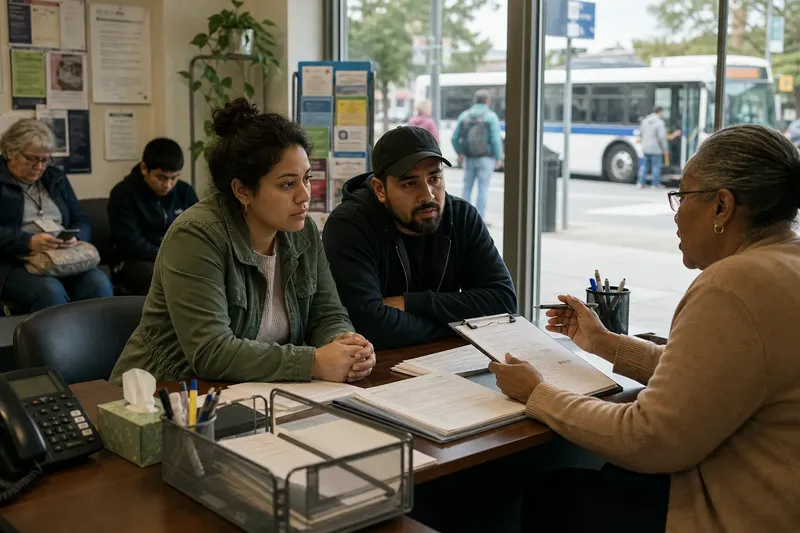
A decision-ready policy question turns a public concern into a choice an authorized body can examine. For example, “families cannot reach services” can become a question about barriers that prevent eligible residents from attending a particular benefits office.
The aim is not to make a difficult problem sound simple. It is to narrow the inquiry without hiding who is affected, what remains uncertain, or which trade-offs a decision may involve.
Concern and issue
A concern is a reason people want attention. An issue is a more precise condition that public action might address. One concern can point to several issues, each involving different causes and authorities.
Start by writing the concern in plain language, then identify the observable condition beneath it. If residents say a town’s bus service is failing, possible issues include routes that do not reach key destinations, schedules that conflict with work shifts, or unclear service-change notices. Those are distinct conditions, not one problem to treat as interchangeable.
Keep the wording neutral at this stage. “People cannot reliably get to evening appointments” leaves room to investigate. “The transit agency is mismanaged” assigns blame before the issue has been defined.
Affected groups
A policy question becomes more useful when it identifies who experiences the issue and how. “Residents” may include people with different travel needs, work schedules, mobility, languages, and access to alternatives. A broad label can let one group’s experience stand in for everyone’s.
Consider direct and indirect effects. A change to clinic hours might help patients who need evening appointments while adding scheduling pressure for staff. People responsible for delivering a service can hold information that users do not, and vice versa.
Ask whose experience is missing from the accounts available. A public meeting may be hard to attend for people with inflexible work hours or limited transportation. Note that gap rather than treating the people who attended as a complete picture.
Define the condition
Describe the issue in terms that can be recognized and examined. “Poor access” needs clarification: does it mean distance, operating hours, waiting time, language support, eligibility, or another barrier? A precise condition gives decision-makers something to investigate without selecting a remedy in advance.
Separate the condition from possible causes. If families miss benefit appointments, the condition is missed appointments. Possible causes might include confusing notices, limited transportation, or appointment times that conflict with work. The question can ask which barriers are relevant rather than assuming an explanation.
Say you are framing a question about missed appointments at a neighborhood benefits office. The starting concern is that eligible residents cannot attend scheduled appointments. You define the condition as missed appointments, identify residents and office staff as affected groups, and limit the inquiry to appointment access at that office. The resulting policy question is: “Which barriers contribute to missed appointments among eligible residents at the neighborhood benefits office, and what changes within the office’s authority should decision-makers consider to address them?” This wording names the issue, people, place, and decision while leaving the causes and remedies open.
Set the boundaries
Boundaries state what the inquiry covers and what it leaves aside. Useful limits include place, population, service, decision period, and level of government. Without them, a question can expand beyond what an agency or community can answer.
Choose boundaries that fit the decision. If a city is considering changes to its library hours, focus the question on those branches and the hours decision. Regional transportation or school schedules may still affect access, even if they are outside the city’s authority.
State exclusions openly. A question about access to one public service need not resolve every cause of household hardship. Clear limits keep the inquiry from implying that the proposal can control what it cannot.
Name the decision
A decision-ready question identifies a choice an authorized body can make. “How can we improve access?” invites ideas but does not name the decision. “Which changes to appointment hours or reminder practices should the agency consider to reduce avoidable barriers?” points to options while leaving room to assess them.
Name the decision-maker and available tools. An agency may be able to change its notices or service hours, while funding rules may require action by a council or another government. Naming the authority keeps the question within the institution’s remit.
Keep the wording open enough to compare alternatives. A question asking whether a favored program should be adopted already leans toward an answer. Ask which options could address the defined issue and what consequences should shape the choice.
Framing questions
How do I distinguish a concern from an issue?
A concern explains why people want attention; an issue describes a condition that public action might address. Translate the concern into something observable before discussing remedies.
Whose perspective belongs in the question?
Consider people directly affected, those who deliver the service, and groups who may face indirect effects. Record whose experience is missing instead of assuming one consultation represents everyone.
How narrow should a policy question be?
Make it narrow enough to match a real decision but broad enough to include conditions and groups that could change that decision. Place, population, service, and authority are useful boundaries to state.
How can I tell if the question is ready?
A reader should be able to identify the issue, affected groups, scope, decision-maker, and open choice without being steered toward a preferred answer. Ask someone affected by the issue to identify what the wording leaves out.
Check the wording
Read the question aloud and look for blame, a preferred solution, or an unexamined claim about responsibility. Replace loaded labels with descriptions. “Uncooperative families” judges people; “families who have not completed enrollment” describes a condition that can be explored.
Next, ask what information would help answer the question. If that is unclear, the wording may combine several issues or omit the choice at stake. A useful question guides inquiry without pretending to settle it.
For public concern to policy question work, the final wording should make the issue, affected groups, boundaries, and decision visible. One last check is to ask whether the authorized body could act on the choice named, while leaving room for affected people to challenge what the question excludes.